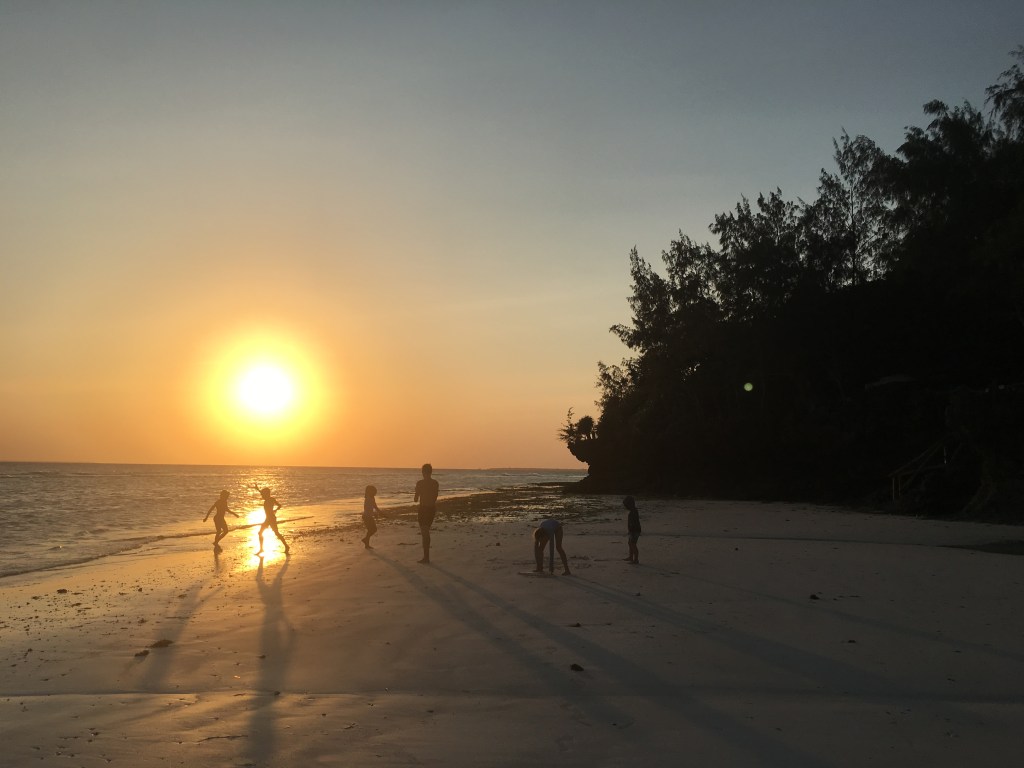
As many of you would know, last year Anna and I returned to Tanzania with our whole family for the first time since we moved home in 2013. The experience exceeded all of our hopes expectations, and we were constantly pinching ourselves at the unique opportunity to connect our kids in very real ways to that important season of their (and our) lives.
More on that story in another email….. or perhaps I should say in a book…. watch this space 😉
One of the things that struck me most about being back in Tanzania was the generous posture of so many of its people. Despite hardships and the kind of poverty that still takes our breath away, they seem to have a deep sense of gratitude and hope.
I love the way the author Richard Rohr describes people like this from developing countries:
“Even though they operated in a world of scarcity they didn’t operate with a worldview of scarcity. We operate with a worldview of scarcity, despite abundance!”
That quote is worth another read through.
Despite scarcity, their posture is abundant.
Despite abundance, our posture is scarcity.
Of course, that doesn’t mean you don’t see scarcity worldviews there, or abundant worldviews here. I’m generalising here and referring to culture as a whole.
In the last hour of our 6 week trip we experienced the most beautiful reminder of this abundant worldview.
Anna and I had just taken the kids through Stonetown, Zanzibar. If you’ve ever been there, you’ll know how unique this city is, with its winding alleyways, ancient architecture, beautiful dressed people, and of course….. the doors!
Having just done some last minute gift shopping for the kids to buy some presents for their friends, we jumped in our bus and hot tailed it to the airport. I looked at my watch and we were on track to arrive at the airport just shy of the two hours before needed for international flights.
As we approached the airport carpark, Anna reached into her pocket for her phone. It wasn’t there. She started searching through her bag, my bag, the kids bags. Gone. I rang it countless times, but no answer. Then it dawned on her she remembered putting it down on a shelf at the last shop we visited. She was 99% sure.
“It’s only a phone, we don’t want to risk being late for the flight… we’ll just have to get another one when we’re home” I said.
But it wasn’t the phone Anna was worried about.
It was the hundreds of photos and videos on the phone of our trip… of the kids reconnecting with the baby home, their Grandfather, their country. Losing these would be devastating.
Deciding it was worth the risk, as soon as we got to the carpark, I hailed down a boda boda (motorbike taxi) and asked him to gun it back to the centre of Stonetown.
As we were weaving around cars trying to beat the traffic, I considered the chances of someone having handed it in. Even if the shop keeper found it, surely it would be too tempting to just keep it and sell it. Even an old iPhone6 would be worth a couple of months wages in Tanzania.
As soon as we arrived, I jumped off the bike and ran up the street to the last shop we’d visited. Short of breath, I asked the young girl in the shop if she’d seen an orange phone that we left behind.
She turned away and walked toward the back of the store, saying something in Swahili I couldn’t quite understand.
Then reached down under a stack of shirts, and pulled out the phone.
“I knew you’d come back” She said with a smile, “So I just kept it hidden until you returned.”
Shocked and stoked at the same time, I thanked her profusely and, reaching into my pocket to find some money, offered to give her a gift to say thanks.
She pushed away the money, put her hand on her heart and said “This is my gift to you, it’s my pleasure to have helped.”
This girl would earn maybe $60/month.
She lives in a world of scarcity.
But her posture was one of generosity and acting like someone who has an abundance.
Maybe she does, and we’re just measuring the wrong thing.
(And yes after a motorbike taxi ride I’ll never forget, I made it back to the airport in time!)

 Potentially Kinetic