Top ten deja vu moments

Wow.

Covid-19.

An awful lot has changed even in the two weeks since I last posted here.

Our kids are home from school and learning online, i’ve pivoted to delivering maths lessons via Google Meet, and a small storage room in our house has become both a classroom for my virtual lessons, and the new office for my work with Forever Projects.

Social isolation…. Zoom for extended family dinners… preparing for what could be a long few months of lying low.

There’s something strangely familiar about this last week though.

Like a proper real life dose of deja vu.

It’s reminding me so much of that season of our life bunkering down in Tanzania for 3.5 years while we navigated a super stressful in-country adoption process. Unable to leave and return to our former life in Australia until the season had fully passed us by.

Here are my top ten deja vu moments from the last week or so.

1. Our home, workplace and kids’ school is one single compound. During those years in Tanzania, we worked at an International School, and lived inside the compound. When we first started fostering Shay, Charlie and Jabari at the end of 2010, we had 4 one-year olds and a four-year old, so it goes without saying that we didn’t get out much! Between Monday and Friday, we hardly left campus, and would only pop out briefly on the weekend for an essential trip to the market, or maybe to treat ourselves to some takeaway. When our kids were old enough, they attended the same school.

Our whole world pretty much existed within a single compound…. kind of like now!

2. A wall existed between us and our closest friends and family. We weren’t allowed to leave Tanzania with Shay, Charlie and Jabari until we’d 100% finished navigating the adoption process. It was 2 long years before I could make a return trip to Australia with my eldest son Jackson, who was 6 at the time. Anna stayed home with our youngest four kids and had to wait another 6 months for her turn to visit home. That season of life forced us to rely on Skype (so outdated now!) to remain connected to those back home who we loved the most.

Our Zoom family dinner last weekend with my dad, sister and brother-in-law gave me flashbacks to that time.

As hard as this distance was between us and our loved ones, it meant that Anna and I had to rely on one another more than ever.

3. Your immediate family is your rock. Anna and I often reflect on how that difficult season overseas was actually quite amazing for us as a couple. No one else fully understands what it meant to go through something like that in the way she does. Feeling uniquely seen and known by her – both through that time, and since then having returned back home – has been incredible for our marriage.

The impact of Covid-19 is on our collective community, and so we have more in common with others in this moment than we did during our journey in Tanzania. But I believe the unique challenges that this chapter will throw at each family and marriage has the potential to strengthen bonds like few other things could.

4. A break from routine and obligation can be a massive blessing in disguise. Anna and I showed up in Tanzania knowing no one. Which meant no extended family dinners, no regular commitments, no birthday parties on the weekend, no existing relationships at all that would be a catalyst for social interaction. Whatever weekly routine we created would be invented by us, as opposed to something we inherited from decades worth of relationships and prior commitments. And within 6 months, we’d increased our family size from 4 to 7! So no one expected much of us either.

Despite the challenges associated with relative social isolation (even writing those two words shows the connection to this current moment!), there was a huge gift to be had from breaking routine and obligation. Where our lives hurt because we missed something from Australia, we’d find ways to replace it in Tanzania. But there was a huge amount of obligation we were also happy to let go of!

This moment in time has me again thinking about the things i’m already missing, and the things i’ll happily not continue once this pandemic is over.

5. Time slowed down. Following the above point, we either couldn’t get as much done (logistics of raising five young kids in East-Africa), or just chose not to anymore. And wow it was refreshing. Tanzanian culture doesn’t move quickly, and after a while even if you want to you, the system around you thwarts any attempts at a faced paced life. Time slowed down, and you noticed things you’d not paid much attention to before. The margins in life were rich, spacious and refreshingly beautiful.

The lack of time scarcity in this last week has been a refreshing reminder that permanently putting the foot on the accelerator is neither sustainable, nor desirable.

6. The trampoline. Just today, I had a great afternoon with our kids on our newly purchased (what timing… how could we have known!) industrial strength trampoline that’s 9 x 14ft. With time scarcity not really an issue at the moment, we created a great game which basically involved not being hit by a giant bouncing yoga ball while we jumped up and down. I haven’t laughed that hard in ages!

About 12 months into life in Tanzania, we purchased a massive trampoline from a family who were leaving the country, and dug it into the ground, so that our young kids could literally walk straight onto it from the grass. We spent every afternoon on that thing, either razzing the kids and joining in ourselves, or enjoying a sundowner and letting their antics entertain us.

I thought a lot about those times as I bounced around this afternoon.

7. Settlers of Catan. Every Wednesday night, a bunch of other teachers and I would bring together whatever delicious snacks we had managed to scavenge from town throughout the previous week, crack some local beers, and enjoy a long game of Settlers of Catan. It was a weekly hump day ritual we all looked forward to. So in another random connection back to that time in our lives, we’d just purchased that very game for our eldest son Jackson for Christmas. Since the kids have been at home this last week or so, we’ve played it non-stop, and it’s likely to become a staple in our weekly diet of family fun.

I’m actually about to play a game now, once i’ve pressed send on this post!

8. Freshly ground coffee. Being out and about far less frequently is no excuse for resorting to instant coffee. A new grinder, some fresh beans, and a filter that looks like it belongs in a science lab, mean I can still enjoy some much needed quality caffeine throughout the day. The smells and sounds associated with grinding the beans takes me back to our kitchen in Moshi, where we enjoyed coffee as fresh as it comes, grown in the hills of Kilimanjaro just a few kilometres from where we lived.

9. Teaching was turned on its head. When I accepted the job at International School Moshi, I was definitely out of my comfort zone. Teaching a room full of students from a variety of linguistic and cultural backgrounds, protecting my students as best I could from my Australian accent and colloquialisms, and becoming familiar with the maths curriculum in the International Baccalaureate system… all of this was new to me, and I needed to adapt quickly.

Pivoting with a day’s notice to delivering lessons on line last week was not without it’s challenges. But this feeling of being thrown in the deep end as a teacher has taken me back to those moments in Tanzania. Drawing on those teaching experiences has gotten me excited about the opportunity to feel refreshed again professionally as an educator.

10. Innovation and Forever Projects. Planning for our first fundraising event began in the margins of time while living in Tanzania. My brother-in-law had recently held his 30th birthday at our friends’ cafe, and so I figured we should run a Tanzanian fundraiser to coincide with my return trip to Australia in 2012. What innocently began as a simple evening of fine food and wine, where a cut from each ticket would go to the cause, quickly turned into an interactive art gallery. The cafe walls were converted into homes for beautiful photography, stories of hope, and invitations for our guests to become characters in the narrative we were telling of a better future for Tanzanian families.

The constraints of distance, time and money had little to know impact on the way we innovated and evolved our ideas.

There is so much potential beauty in constraints, and as I look down the barrel of a few months of social isolation, i’m determined not to become a victim to the perceived lack of possibilities available to our Forever Projects team during this time.

Both the local partners we fund and families they serve need us to innovate and think outside the box now more than ever.
The front lines of a pandemic

While I was waiting for an early morning takeaway coffee this week at our local cafe, a nurse from the local hospital wandered in for her pre-shift caffeine hit. We got to talking and I thanked her for serving so generously in what is likely to become a very hectic season.

She’s on the front lines. And indirectly, her family are too.

As a part-time maths teacher, i’ve chatted with colleagues at school and followed the commentary in the news these last few days around whether schools should stay open, and whether it’s fair to ask teachers to show up each day to gatherings of more than 500 people. Surely we’re more likely to contract the virus given how hard it is to isolate from students who don’t know better?

Let’s save that debate for another time and space.

My point being that while we’re not on the front lines like the nurse I chatted to, we’re far from working from home too. Our families are also more exposed.

But I can’t help thinking about my other part-time role at Forever Projects, and as this pandemic begins to spread in Tanzania, i’m thinking about who’s on the front lines there too.

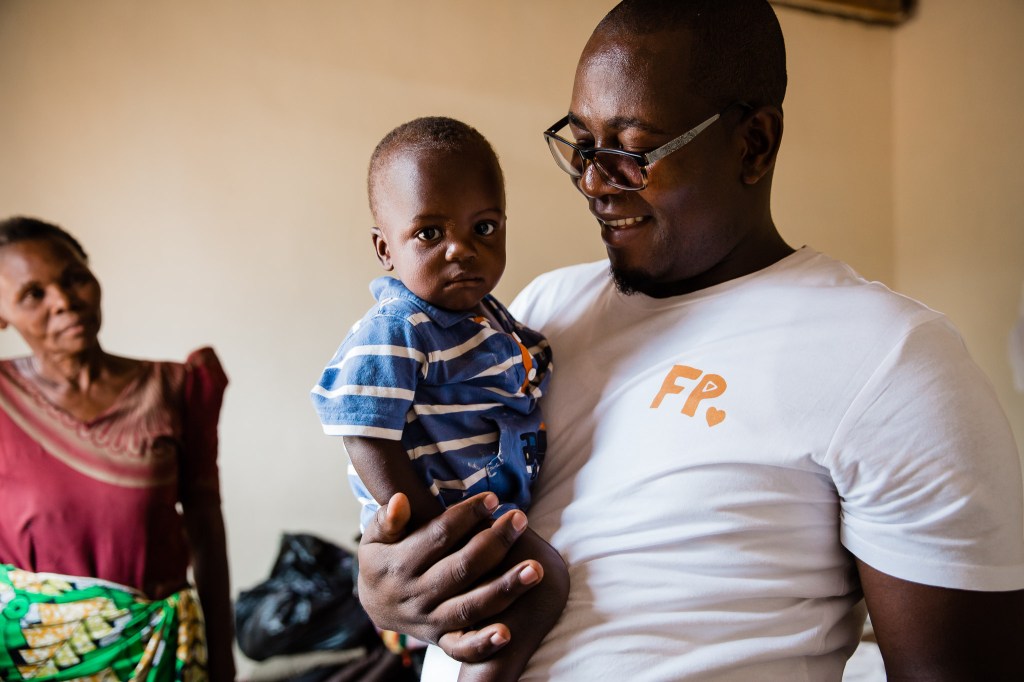
There’s my friend Hassan, who’s the community development officer for our local NGO partner, Forever Angels Baby Home, in Mwanza in Western Tanzania. People call him superman, and rightfully so. He’s a beautiful human, highly capable, full of kindness, generosity, and wisdom.

Each week, local staff like Hassan engage with hundreds of people – some of the most exposed and vulnerable on our planet. Our team on the ground provide nutrition to at-risk babies, provide crisis support to immediately improve the whole family’s quality of life, and then journey with them for 12-months as they are empowered to set up small businesses and step into independence.

Hassan and all of our local partners are on the front lines of this pandemic.

They can’t work from home.

Yet they bravely step up.

They may not work for a hospital.

But they may as well. Because Tanzanian hospitals aren’t equipped to deal with malnourishment, so they refer these vulnerable children to our local partners anyway.

They’re on the front lines as the pandemic approaches.

And their bravery and generosity inspires me to shine a light on their work, communicate the obstacles they face to our community back home, and inspire people to join us as we remove them.

Together, we can back brave legends like Hassan on the front lines.

What you really do for a living

I love Simon Sinek’s work, and thoroughly enjoyed his most recent book The Infinite Game.

In one section he outlines how each person or organisation playing this infinite game must have a just cause. This includes five elements, and each of these would be great to explore in another post.

But the thing that stood out to me was the way he explained that our just cause is not the same as our why.

So I’m a high school maths teacher.

And a strategic director at a charity.

These are just causes for sure. But there’s something lying beneath both of them that connects to a singular why.

On reflecting some more, I’ve realised the thing that underpins everything I’m doing in both of these spaces is an intentional creation of culture around a vision for the tribes i’m journeying with and leading.

A culture within a classroom that works to create positive change in students. Where they adopt the kinds of attitudes, postures and skills that will serve them well beyond their years at school. But that will definitely assist them in any short-term game they’re playing around tests, grades and exams.

And a culture within our Forever Projects community centred around a vision for a better future for the lives of Tanzanian families. We shine light on our tribe as they use what’s in their hands to fund the work. Then connect them to the impact they’re having via changed lives in Tanzania. Story by story, we’re building an invitational culture for people to become a part of.

These cultures are transformative for everyone involved.

I’m increasingly aware that my contribution to co-creating cultures like this is what I really get off on.

It’s where I feel that sense of flow with my work.

And it’s this intentional focus on creating culture that I believe is the most important ingredient in moving from potential to kinetic.

Looking forward to exploring these cultural themes some more in the coming weeks.

Investing in our biggest assets

I imagine for almost anyone who’s starting out on a journey to make change happen, those would be time, and people.

Our biggest assets are our people.

Our biggest currency of investment is our time.

We invest our time into remarkable people whose values align with ours on the change making journey we’re on.

We listen.

We nudge.

We guide.

We co-create.

We use vision and clarity to inspire and enrol them for the journey.

We wind them up them up, point them in the right direction, then let them go.

We use our time for our people, then deposit them into time to do their thing.

Then loop back, discuss, provide and receive feedback on how they went, reflect, and repeat.

I’m astounded at the change we’ve been able to make as a relatively small tribe at Forever Projects.

With relatively few assets and little cash, we’ve managed to grow, drip by drip, by a commitment to this process.

Who are your people and what time are you investing?

Figuring it out (see you in a week)

I’ve been chipping away at this blog for a month now, and it’s been great to just begin. writing daily, following my intuition that publishing is a good idea, then figuring out the finer details of how that looks practically as I’ve gone.

In most things, we start out with an idea, but once we begin and get some fresh data, we can tweak the course we’re headed and make new decisions.

I’m really enjoying the process of writing – getting thoughts out of my head onto paper.

As a maths teacher by trade, written words aren’t my go to language, and so the decision to write every day has been a great way to practise a craft which I’ll depend upon much much more in this new season of work I’m in.

So I believe putting pen to paper each day is a good practice for me.

But what else could I be writing about, and, with a scarcity of time, what should the focus be?

Widening the frame even more in regards to time scarcity, what could I be doing with my time instead of writing?

In short…

Who am I writing for?

And what change is it supposed to be making?

These two questions are a central part of making change happen, and are lasting takeaways of the altMBA I did last year.

When I kicked this blog off, I shared my answers to these questions around ‘who’ and ‘what’ it was for with some altMBA alumni I’ve become great friends with:

Who’s it for? Anyone like me on a journey towards a vision of the future you’re in love with who is leading a small passionate team along the way. You may be aware of your true-north, but you’re totally making it up as you go. Imposters welcome!

What’s it for? Personally – it’s a way for me to reflect publicly on what i’m noticing as I go about creating change in my new season working part-time at Forever Projects. Collectively – I hope some of my reflections and insights add fuel to the journey for the ‘who’ above, and that as I connect with others who resonate, i’ll gain some of their reflections, comments and insights as fuel for myself.

Circling back here has been really helpful, and I believe I can achieve the above with this blog by just writing once each week.

But what about all of those benefits i’d mentioned of writing daily?

From a recent post

I’m going to pivot this blog for the next couple of weeks, and point it toward telling some of the stories that I have the privilege of playing a part in transmitting. We believe that by shining a light on those stories, we create an invitational culture for us all to play ever greater roles in our collective journey.

We’re actually about to launch our own Forever Projects blog (think online newspaper nestled into our existing website). It’ll be a place for all of our stories to live, both of donors stepping up with bravery and generosity, and of the impact of those funds in Tanzania. From NGO partners sharing their experiences of the complexities and challenges of the work in the ground, to stories written from the perspective of our donor community.

It’ll provide an opportunity for people who visit the site a chance to get a feel for our FP culture of ‘what’s in your hands’. We want to continue to create a really invitational feel. In our experience, it’s that culture that inspires people to take action as a character in our story.

So in the coming months, as we populate our FP blog with the abundance of stories we already have to tell, I’ll dedicate the rest of my writing time to that.

I’m feeling quite good about pivoting this in this way! Clarity often comes when we return to our why, who and what.

Writing daily?

Tick.

Some clarity around the who and what?

Tick.

See you in a week!

East – West vs North – South

In his award winning book Guns, Germs and Steel, the author Jared Diamond talks about why some societies developed, spread and went onto conquer and dominate other societies. Why did the Spanish travel to Peru and conquer the Incans, and not the other way around?

One factor was that the societies who developed spread east – west as opposed to north – south. Given the climate is similar along parallels of latitude, as opposed to meridians of longitude, societies that spread east – west were able to replicate food production more efficiently. Members of their societies could eventually specialise in food production at scale, freeing up others to become scientists, leaders, and soldiers to name a few.

When I was reminded about this part of the book recently, I began to wonder what spreading east – west looks like for us as a charity.

How do we allocate more time, energy and attention to those kinds of initiatives, and avoid the temptation to spread north – south.

However, some resistance is worth pushing through though.

And expanding without a clear purpose isn’t always a good idea.

What does east – west look like in your corner of the world?

A delicious cup of coffee that tastes like change

Drip. Drip. Drip.

That’s the way I love my coffee. A mug of long black slow and steady through the filter.
(The legends over at Goodies on Crown St in Wollongong do a ripping good one.)

Drip. Drip. Drip.

What does it look like? How does it smell? What can I hear as it’s being brewed one drip at a time?

The sound is consistent. Almost rhythmic. The smell slowly takes hold until you can almost see the flavour swimming around in the beaker of black gold.

Our friend Luke over at 212 Coffee is applying a different filter to the way he’s roasting coffee.

For the last two years, $5 from every kilogram of coffee sold has been donated to Forever Projects.

Drip. Drip. Drip.

As of today, they’ve donated a total of $2,699, which has empowered two whole Tanzanian families to Independence. And they’re well on the way to a third.

Families like Judith’s.

That’s how change sounds, smells, looks and tastes.

The reason Luke and the team at 212 have been able to show up so consistently has been the quality of the beans they’re roasting. Their customers keep coming back. We’re seeing time and time again, you can’t go adding purpose to profit with an inferior product.

Stories like these are powerful reminders that we all have filters that we can apply to what we’re already doing.

“What’s in your hands?” as we say around here?

One drip at a time, these filters create an aroma of change that’s delicious.

Conduit

One definition of conduit includes the electrical context:

“A tube or trough for protecting electric wiring”

Swinging back to leadership, another definition:

“A person or organization that acts as a channel for the transmission of something.”

One of my best friends in the world is a conduit. A few years ago, he volunteered at a local arts initiative where the walls in our city were painted by famous street artists from around the world.

From what I remember, his official role was to keep the paint, supplies (and food!) up to the artists while they worked. But the unique value he added was as a conduit. He’s utterly amazing with people, and from a place of empathy, was able to understand the needs of the event organiser, artists, crowds and onlookers, local council (where he had existing connections he could lean on) and local businesses whose walls were being painted.

He’s a conduit, and he did way more than supply paint. Without him, there would have been way more friction, so he got invited back again and again.

I want to be that kind of conduit as a leader at Forever Projects… the kind that is a channel for the transmission of hope. Hope both on the ground in Tanzania, and hope here that we can use our time, talent and money in a way that leads us toward much more meaning, purpose and connection in our lives.

The best way I, and we at FP, know to do that is tell stories of those we see doing it already.

So i’m going to pivot this blog for the next couple of weeks, and point it toward telling some of the stories that I have the privilege of playing a part in transmitting. We believe that by shining a light on those stories, we create an invitational culture for us all to play ever greater roles in our collective journey.

Conductivity

It was so great to get some feedback and engagement following yesterday’s blog post. Much of the following flow (haha) out of some insights and reflections from a friend who nerds out on this stuff!

So what does it mean to be a conductive leader?

In the context of energy flow, conductors are known for freedom and free flow. 

In a conductor, like copper, electric current can flow freely. 

The outer electrons of their atoms are loosely bound and free to move through the material. 

Non-metallic solids like plastic or timber are said to be good insulators, having extremely high resistance to the flow of charge through them.

Insulators hold tightly to their electrons, and represent more of a high-control environment.

My preference for a leadership style would be more copper than plastic. 

But even in conductors like copper, there are some bounds placed on the electrons.

There’s not total freedom. Leaders must purposefully determine where the boundaries lie.

And there are certain forms of energy we wouldn’t want to see flow through our system to those we’re leading.

So perhaps a better question than “How’s your conductivity as a leader?” is: 

“Are you aware of your natural disposition towards either extreme?”

And:

“Can you appropriately adjust your level of conductivity for the various people and contexts you pour your energy into?” 

Conducting

Been thinking about this word ‘conductor’ and others related to it.

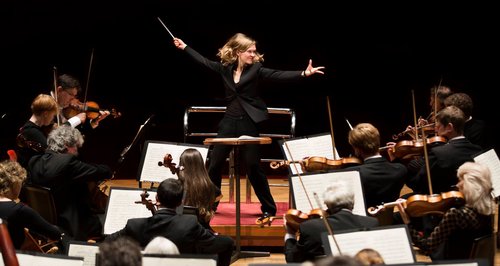
There’s the music conductor.

Then the electrical conductor.

A conduit.

And conducive, which apparently originated from conducting in English and conducere in Latin. Thanks Google.

I like this idea of a body or medium which is conducive to energy flowing through it, from one end to another.

The energy transfer culminates in movement if it’s converted to kinetic energy.

Fascinating to think about a musical conductor in this way, creating movement in the members of their orchestra as they play instruments and perform music.

As leaders, we’re kind of like that musical conductor.

So what energy flows through us?

What is it’s source?

And what collective movement (noise) do we seek to make in the members of our orchestra?

Next up…. how does this relate to conductivity?